

Key Takeaways
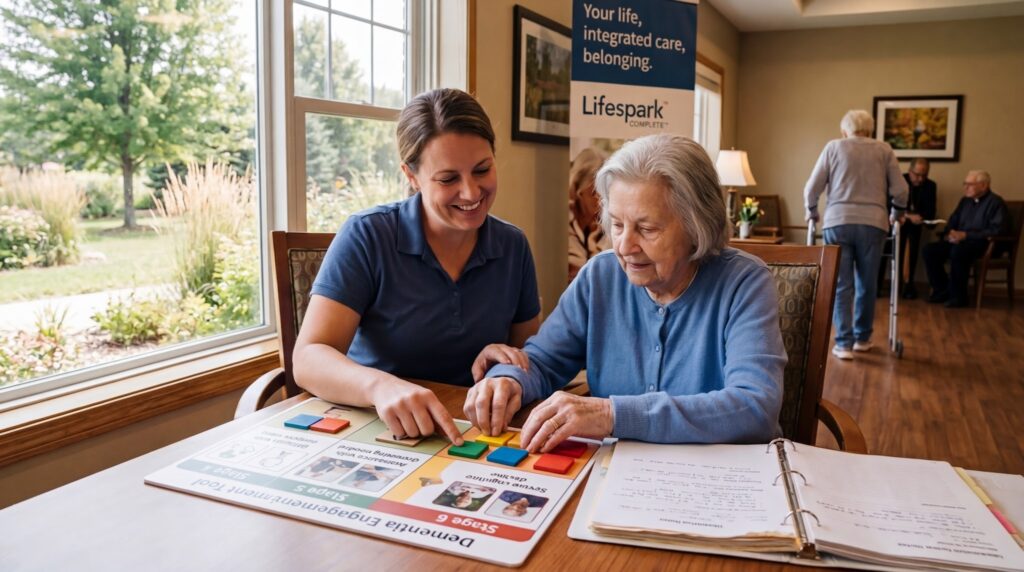
- The FAST scale is an assessment tool to help track dementia progression across 7 stages
- Early stages involve mild forgetfulness, while later stages require more hands-on support
- The scale helps families set realistic expectations and plan ahead
- Signs like wandering or caregiver fatigue may signal that memory care is the right next step
- A compassionate, knowledgeable care team can help guide your family through the next steps
What Families Need to Know About the FAST Scale
When a loved one starts showing signs of dementia, it can feel like you’re navigating uncharted waters without a map. Every new change raises questions, and it’s hard to know what to expect next or how to prepare. That uncertainty is one of the most difficult parts of the journey.
The FAST scale, short for Functional Assessment Staging Tool, is a simple framework that helps families understand where their loved one is in the progression of dementia so that they can make more informed, caring decisions together.
It doesn’t have all the answers, but it gives you a starting point. Learning about dementia stages can help families find the right level of support at the right time.
The 7 Stages of the FAST Scale
Stages 1 Through 4: Early Changes
The first 4 stages of the FAST scale cover everything from no noticeable memory issues to more visible day-to-day challenges.
In Stage 1, there are no signs of decline. Your loved one feels and functions like themselves.
Stage 2 brings mild forgetfulness, like misplacing keys or forgetting a name, but they’re still fully independent.
Stages 3 and 4 are where families often start to notice something feels different. Your loved one might struggle with tasks at work, have trouble managing finances, or need more time to complete things they used to handle easily.
If you’re unsure whether changes are typical or worth watching closely, learning about the early signs of memory loss in seniors can help you feel more prepared. These changes are real, but support at this point can be light and flexible.
Stages 5 Through 7: Greater Support Needed
By Stage 5, your loved one may need help choosing appropriate clothing or remembering recent events. They’re still able to eat and use the bathroom independently, but the need for daily guidance becomes more consistent.
The middle stage is often when families start exploring assisted living and specialized memory care options more seriously.
Stage 6 brings a loss of ability to manage personal care on their own. Bathing, dressing, and toileting may require hands-on help.
Stage 7 represents a significant physical and verbal decline, where your loved one may lose the ability to speak or walk. At this point, memory care can offer meaningful comfort, dignity, and connection.
How the FAST Scale Can Help Your Family
One of the hardest parts of caring for someone with dementia is not knowing what comes next. The FAST scale helps set realistic expectations for each stage, so you’re not caught off guard.
When you know what changes to look for, you can plan for changes instead of reacting in the moment.
The scale can help open up conversations that might otherwise feel too heavy to start. Talking about memory care options, care planning, or future living arrangements becomes a little easier when you have a shared framework to reference.
It gives families a gentle way to say, “Here’s where we are, and here’s what we may need to think about.” The 3 stages of Alzheimer’s progression can also offer additional context as you work through these conversations together.
Most importantly, the FAST scale helps families move forward with more clarity. It’s not about labeling your loved one. It’s about understanding their needs so they can receive the right support at the right time, with warmth and respect for who they are.
When Memory Care Becomes the Right Support
Signs That More Support May Be Needed
Sometimes the signs are gradual, and sometimes they feel sudden. Wandering, confusion about familiar places, or safety concerns at home are all signals that the current level of care may not be enough.
If your loved one is leaving the stove on, getting disoriented at night, or becoming hard to redirect, it may be time to explore more structured support. Learning how to manage wandering behavior can also help your family feel safer and more prepared in the meantime.
Caregiver fatigue is another sign worth paying attention to. When the weight of caregiving starts affecting your own health, your relationships, or your ability to be present, that matters too. Reaching out for support isn’t giving up. It’s one of the most loving things a family can do.
What to Look for in a Memory Care Community
A supportive memory care community offers more than just physical assistance.
Look for personalized care plans that are shaped around each person’s history, preferences, and needs. Structured daily routines and meaningful activities help residents feel grounded and engaged throughout the day.
Exploring community events can give you a real sense of how days are structured.
Spiritual and emotional support is just as important. For residents and families alike, having access to counseling, chaplain services, and programs that honor each person’s beliefs can bring real comfort during a tender season of life.
Your Next Step After the FAST Scale
The FAST scale is a helpful starting point, but it’s not the final word. Every person’s experience with dementia is unique, and a number on a scale can’t capture everything about your loved one or what they need. Use it as a guide, not a verdict.
At Cedar Creek Senior Living, our team is here to help your family think through next steps with warmth and care.
Whether your loved one is in the early stages or needs more involved memory care support, reaching out to a senior living community can help your family feel less alone in the process. A conversation is a good place to start.
Visiting a memory care community can help families learn more about the support and care waiting for their loved one.